Australia Showed Canada That National Security and Justice Can Coexist
When Australia decided to list the Islamic Revolutionary Guard Corps (IRGC) as a terrorist organization, it demonstrated that protecting national security does not require abandoning fairness. Canada, despite years of insisting it needed more time to avoid harming innocent former conscripts, ultimately did the opposite.
For years, successive Canadian governments defended their refusal to list the IRGC by pointing to one recurring concern: the need to ensure that innocent people, particularly those who had been forcibly conscripted into the IRGC through Iran’s mandatory service, would not become unintended victims of the policy.
This explanation was repeated to Parliament, to the Iranian-Canadian community, and to the media. The message was clear: Canada wanted to get it right.
Yet when the listing finally came in June 2024, that promise disappeared.
Instead of introducing a carefully designed framework that distinguished between voluntary IRGC members and individuals compelled into service, the government rushed forward with a listing that has since left thousands of former conscripts facing uncertainty, prolonged immigration delays, procedural fairness letters, and inadmissibility findings.
The very harm Canada claimed it was trying to avoid became reality.
Australia Took a Different Path
Australia reached the same national security conclusion: the IRGC should be listed.
The difference lies in how that decision was made.
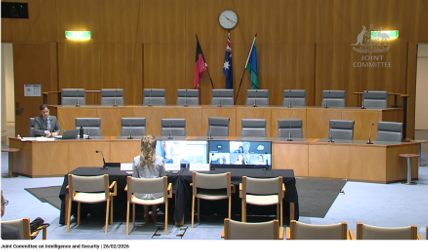
Rather than rushing to act, the Australian Parliament conducted a comprehensive review through its Parliamentary Joint Committee on Intelligence and Security. The process invited submissions from members of the public, affected communities, legal experts, and civil society organizations, allowing those most affected by the proposed listing to participate in shaping the policy. Among those making submissions was the Unheard Conscripts Advocacy Network (UCAN), which urged the Australian Government to recognize the fundamental distinction between individuals who voluntarily joined or supported the IRGC and those who were involuntarily conscripted through Iran’s mandatory service. UCAN emphasized that Australia could strengthen national security while ensuring that innocent former conscripts would not become unintended victims of the listing.
The process included:
• receiving submissions from members of the public and stakeholders;
• holding public hearings where affected communities and experts could present evidence;
• examining the legal, security, and humanitarian consequences of the proposed listing; and
• issuing detailed recommendations before the Government finalized its response.
Most importantly, Australia did not overlook the issue of compulsory conscription.
The Committee specifically addressed the concern that thousands of Iranians had been forced into the IRGC through mandatory conscription, and recommended that government agencies distinguish between genuine members and supporters of the IRGC and those who had no meaningful choice.
The Australian Government accepted that recommendation.
Its official response states:
“The Australian Government agrees to this recommendation and will continue to support agencies in distinguishing between genuine members and supporters of the Islamic Revolutionary Guard Corps, and persons who were involuntarily conscripted into the Islamic Revolutionary Guard Corps for compulsory service in Iran.” (Australian Government, Australian Government Response to the Parliamentary Joint Committee on Intelligence and Security Report: Review of the Listing of the Islamic Revolutionary Guard Corps as a State Sponsor of Terrorism under the Criminal Code, June 2026, Recommendation 3, p. 4.)
This is not a blanket exemption.
It is something more important: a recognition that compulsory service alone is not evidence of support for terrorism or extremism.
Australia acknowledged the obvious reality that millions of young Iranian men never had the freedom to refuse conscription.
The Australian Government’s response illustrates the value of meaningful public consultation. While the Government’s position reflects the Parliamentary Committee’s recommendations rather than any single submission, the consultation process ensured that concerns raised by organizations such as UCAN and other stakeholders were considered before policy was finalized. The result was a framework that protects national security while explicitly recognizing the difference between coercion and voluntary affiliation.
Canada’s Broken Promise
Canada repeatedly justified delaying the IRGC listing by claiming it needed additional time to ensure innocent individuals would not be unfairly affected.
When the listing finally occurred, however, there was no publicly consulted framework explaining how former conscripts would be treated.
There were no public hearings dedicated to this issue.
There was no invitation for affected former conscripts, legal experts, refugee advocates, or the Iranian-Canadian community to propose safeguards.
Instead, the government convened a cabinet meeting, announced the listing, and left immigration officials to apply existing inadmissibility provisions without clear public guidance regarding former compulsory conscripts.
The consequences are now visible.
Although the Government of Canada has continued to maintain that immigration decisions involving former IRGC conscripts are assessed on a case-by-case basis, the experience of many applicants and the reasoning found in immigration decisions tell a different story.
Procedural Fairness Letters issued by Immigration, Refugees and Citizenship Canada (IRCC) have repeatedly stated that compulsory military service within the IRGC constitutes membership in the organization. Likewise, inadmissibility decisions have concluded that mandatory conscription alone satisfies the membership requirement under Canada’s immigration legislation, despite the absence of evidence that the individual voluntarily joined, supported, or participated in the IRGC’s activities beyond compulsory service.
If compulsory service is automatically treated as membership, then the government’s repeated assurances of individualized, case-by-case assessment become difficult to reconcile with the reality reflected in these decisions.
Former conscripts who never voluntarily joined the IRGC, never supported its activities, and often left Iran years ago are increasingly receiving procedural fairness letters questioning their admissibility to Canada.
Many have experienced years of delay while their applications remain under security screening.
Others face possible inadmissibility solely because their compulsory conscription placed them within an organization that Canadian law now treats as a terrorist entity.
Ironically, this is precisely the outcome Canada claimed it was trying to prevent.
Consultation Matters
Public consultation is not a bureaucratic exercise.
It is how governments identify unintended consequences before they become real human tragedies.
Australia understood that listing the IRGC would affect not only national security but also migration decisions, criminal law, refugee protection, and thousands of innocent people who had no control over where they performed compulsory conscription.
By inviting submissions, hearing expert testimony, and carefully considering different perspectives, Australia produced a policy that recognizes an essential distinction between voluntary participation and coercion.
Canada skipped that step.
The voices of former conscripts, the people most directly affected, were never meaningfully incorporated into the decision-making process.
The result is a policy that treats vastly different circumstances through the same legal lens.
National Security Should Never Come at the Expense of Justice
Protecting Canadians from the threats posed by the IRGC is a legitimate and necessary objective.
Former compulsory conscripts have never argued otherwise.
What they seek is recognition that being forced into conscription by an authoritarian regime is fundamentally different from willingly supporting that regime.
Australia demonstrated that governments can strengthen national security while preserving procedural fairness and individualized decision-making.
Canada publicly promised to do the same. It repeatedly assured Canadians that innocent former conscripts would be protected and that immigration decisions would be made on a case-by-case basis. Yet the treatment of compulsory conscription as “membership” in Procedural Fairness Letters and inadmissibility decisions raises serious questions about whether that commitment is being fulfilled in practice.
Canada can still learn from Australia’s example. The government should establish clear public guidance recognizing compulsory conscription, ensure that individualized assessments genuinely distinguish between voluntary members and involuntary conscripts, and review immigration practices that currently place innocent former conscripts under extraordinary pressure despite the absence of any evidence that they supported the IRGC’s activities.
Justice is not achieved by treating coercion as choice.
It is achieved by recognizing individual circumstances while protecting national security.
Canada promised to protect innocent conscripts before listing the IRGC.
It is time to fulfill that promise.